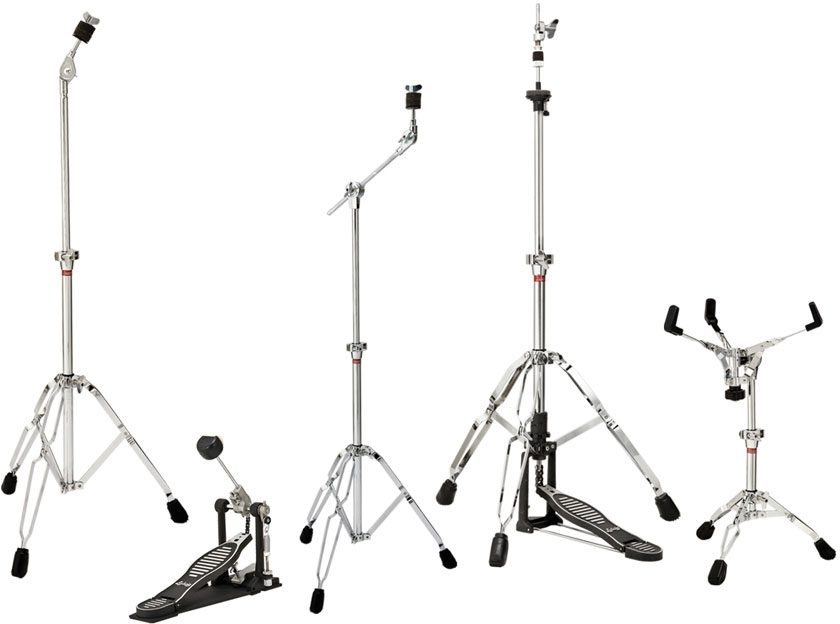
Several years ago I purchased a Ludwig Element drum set to use at our church. Included with that Element kit was a Ludwig 400 series hardware pack, which included a bass drum pedal, hi-hat stand, cymbal boom stand, straight cymbal stand, and a snare stand. I’ve been so impressed with this very reasonably-priced hardware that I thought I would write a quick post about it.
In my experience, most budget-priced drum hardware is woefully inadequate. The cymbal stands are so lightweight that you’re afraid they will tip over with even moderately hard playing. The adjustment points on the stands can also feel weak, and they have to be wrenched down with a pair of pliers to keep things from loosening up while you’re playing. The hi-hat stands and kick pedal often suffer from a lack of adjustability that can make them difficult to tweak to your liking.
In my experience, that is NOT the case with the Ludwig 400 series. These stands are light, but not TOO light. The stands have just enough weight to feel sturdy and solid, but without being overly heavy. The adjustment points all work very well, and the wingnuts and wingscrews are large enough for you to easily grip and tighten down without needing those pliers. And the adjustments hold firm–even with moderately hard playing (full disclosure: I’m not a really heavy hitter, particularly at church). The kick pedal and hi-hat stands are imminently usable. They don’t have ALL of the adjustments that you might expect from top-of-the-line gear, but they have the crucial adjustments that are needed most to dial them in.
I’ve been using these stands weekly at church for years (taking them out occasionally for gigs), and have never had a single problem out of them. In fact, I’ve considered trading in some of my heavier, “pro quality” stands from my regular gigging kit for more of these, just to lighten my load. And perhaps the best feature for this hardware pack is the price. For this level of quality, I would expect to pay much more. So if you’re in need of a hardware pack to round out a new drum set that doesn’t include hardware, definitely consider this one.
P.S., if you’re looking for something just a bit better (albeit a bit more weight) for not much more money, also check out the Ludwig Atlas Standard Hardware Pack.
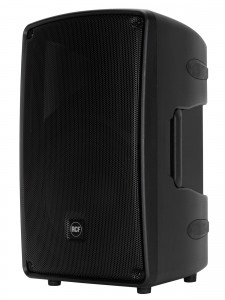
Last year, I was in the market for some compact, lightweight, loud PA speakers for my own live sound system. I considered the Yamaha DSR112–a favorite in the powered speaker market, and one of the loudest in its class. But I was somewhat put off by the heavier weight and relatively high price compared to other similar speakers. Then I discovered the RCF HD12-A. The HD12-A seemed to fit the bill for what I was looking for. It’s a compact, lightweight, powered speaker that has excellent sound quality and can go really loud–some say on the order of the DSR112. Continue Reading »
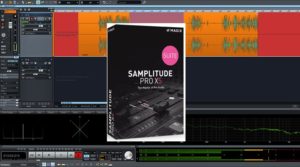
I’ve still been using Samplitude Pro X4 Suite and have been a bit of a hold-out on buying the upgrade to Samplitude Pro X5 Suite. For the past several months, the upgrade has been selling for $249. They throw in a lot of extra goodies with that, but frankly, none of them are worth much to me. I’m only worried about the actual Samplitude upgrade, so $249 seemed a little steep for that.
Just recently, Magix lowered the price on the Pro X5 Suite upgrade temporarily to $199. That was a little more tempting, but I still wasn’t quite there. In years past, I’ve successfully used coupon codes on Magix sale priced products, but that was usually for their consumer stuff, like Movie Edit Pro or Magix Music Maker. But in more recent years, when I’ve tried one of those coupon codes, I receive a message that says “this code cannot be used for this product”, or something like that, presumably because the product was already on sale.
However, this morning, I added the Samplitude Pro X5 Suite Upgrade to my cart and tried to use the most recent coupon code I had received from Magix via e-mail (MGXMAR2021), and it worked! So I was able to purchase the Pro X5 Suite upgrade for only $159.20 total! That price seems a little more reasonable to me, since I think in years past I was able to buy the upgrade at “regular price” for around $150. In any case, I thought I would share this info with others so they could also take advantage of this before Magix either raises the price or stops accepting the code!
If you’ve read many of my blog posts, you know my DAW of choice is Samplitude Pro X Suite. However, when I first started out with computer-based recording, I was using the “consumer” version of Samplitude, which is now known as Samplitude Music Studio. If you’re interested, I wrote a series of articles about the evolution of the consumer version of Samplitude, the first of which you can find by clicking here. Continue Reading »
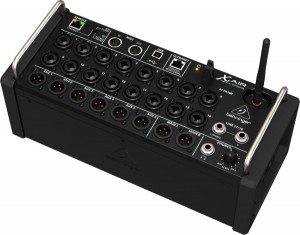
I’ve recently started jamming with some guys around the studio once in a while just for fun, but I ran into a slight problem: I need to keep my drum mics connected to my mic preamps so they’re always ready for recording drum tracks. However, I also needed to connect my drum mics to my live mixer (a Behringer X-Air XR18) so I can use my in ear monitors and add drums to the mix when jamming. So to put it simply, I needed a way to split the signals from my drum mics and send them to a couple of different sets of inputs. Continue Reading »
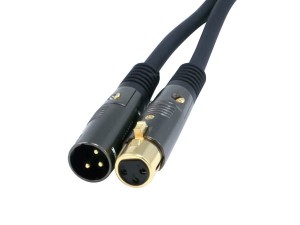
A while back, I was in need of a few more XLR mic cables for use around the studio. After reading some positive reviews of other products from Monoprice, I decided to give their Premier Series XLR Microphone Cables a try. The specs are impressive. They use a thick, rubber-jacketed cable with a braided copper shield, and claim to use 16 AWG conductors (more about that later). The metal XLR connectors have gold-plated pins and are serviceable–as opposed to the molded plastic connectors found on many budget mic cables. Finally, the Monoprice cables sell for considerably less than comparable cables from other brands, and include a lifetime warranty–you certainly won’t get that with any other “budget” mic cables. Continue Reading »
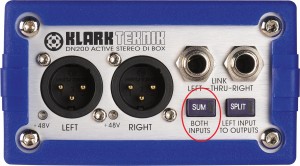
In my article, The Stereo to Mono Summing Cable that No One Makes, I described how to build (or buy) a cable that will take a stereo unbalanced signal and sum it to mono for connection to a PA system (mixer, power amp, etc.). You can connect the output end of such a mono-summing cable directly to a regular line 1/4″ line input. If, however, you need a balanced signal for connection to an XLR mic input on a mixer, you’ll need to use a mono-summing cable in conjunction with a DI box. Since writing that article, there have been several DI boxes that have hit the market that do something similar to what the mono-summing-cable-plus-DI-box combo do, so I thought it might be good to provide a quick overview of some of them. I’ve decided to list these in the order of the selling price from least to greatest. Continue Reading »
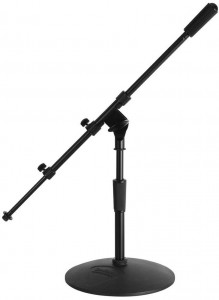
After years of recording and doing live sound, I’ve discovered that buying a mic stand for your kick drum is NOT where you should try and save some money. It’s just not worth it. A cheap stand will be tipping and slipping until you’re ready to pull your hair out. You’ll try all kinds of creative hacks involving duct tape, string, and sandbags to prevent it, only to have it happen again in the middle of a session or live gig. With that being said, I’d like to recommend a couple of specific mic stands that should serve you well in this application. Continue Reading »
I’ve owned a Behringer X-Air XR18 digital mixer for a few years now. I still love it and highly recommend it. I’ve used it mostly around my studio for band rehearsals, and for a while at church while we were waiting for warranty repairs on our X32. In both of those settings, I used it in Wi-Fi Client mode, with it logging on to an external router so my control devices (phone, tablet, & PC) could also have access to the Internet. I’ve also used my XR18 in Access Point mode briefly around my studio and had used it as an Access Point on one gig. In both of those scenarios I had zero problems out of it. I had read some gig horror stories on forums about Wi-Fi problems using the built-in Access Point with the X-Air series, but had not experienced it for myself–until recently. Continue Reading »
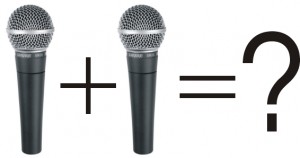
One of my most popular articles has been The Mono Summing Cable that No One Makes. I’ve been contacted by more readers regarding that article than probably any other that I’ve written. That article details why it’s a bad idea to use a regular Y-cable or TRS-to-TS cable to sum two (usually stereo left & right) line-level signals to mono by simply shorting the outputs together. It’s ok to use such a cable for SPLITTING a signal, but not for COMBINING or SUMMING two signals. That being said, it can work ok on some devices, but on others it can cause distortion, weird phasing artifacts, and possibly even damage the outputs of your gear. However, combining the outputs of two dynamic microphones is a different story, and in some applications it’s ok to do so with a regular XLR Y-cable, as we will soon see. Continue Reading »
This blog contains affiliate links to products that we own and use. If you make a purchase after clicking a link, we may earn some money to help offset our expenses and create more helpful content like what you see here.
 December 11, 2023
|
Posted by Jon (admin)
December 11, 2023
|
Posted by Jon (admin)
 Categories: Drums, Reviews
|
Categories: Drums, Reviews
|  Tags: DRUM, hardware, pack, recommended